Roundtable: Branding – The Mark of a Strong Nonprofit

Branding and marketing are not synonymous. Great marketing – in both for-profit and nonprofit organizations – starts with strong and consistent branding, which is then reinforced by the organization’s people, programs, and communications. Think of it this way: a brand is an organization’s identity – the essence of what you are. This brand identity is sent…

Details

Roundtable: Are Your Board Meetings Time Traps?

Do people arrive late? Skip meetings? Do members come unprepared? Is precious meeting time spent on unproductive items? With board meetings at the center of most members’ nonprofit experience, efficient and rewarding sessions are paramount. Naturally, Board Chairs want each member to leave feeling time was well-spent, and even eager to come back. True, avoiding…

Details

Roundtable: Nonprofit Governance – Who’s in Charge?

Mixed messages due to ill-defined roles damage board productivity. The #1 obstacle to successful governance is board and staff not knowing who is in charge of what, according to Nancy Falls, author of Corporate Concinnity in the Boardroom. Beyond the obvious – the Board guides and Management operates – NESC has observed numerous nonprofit organizations struggle…

Details

What Is Social Enterprise?

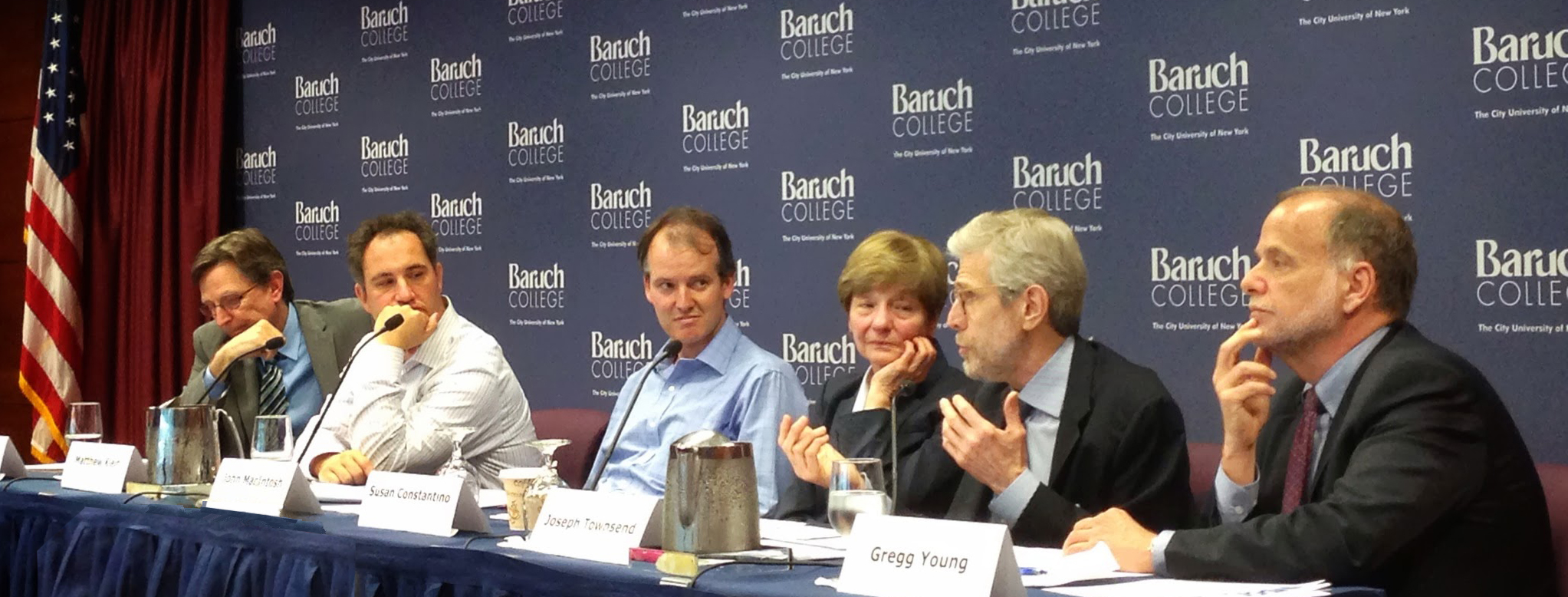
Left to right: Thomas S. Lyons, Ph.D., Lawrence N. Field Family Chair in Entrepreneurship, Baruch College, Zicklin School of Business. Matthew Klein, Executive Director, Blue Ridge Foundation New York. John MacIntosh, Partner, Sea Change Capital Partners. Susan Constantino, President, Cerebral Palsy of New York State. Joe Townsend, SVP of Social Enteprise, NESC. Gregg Young, Board…

Details

Roundtable: What Does It Mean To Be Mission-Driven?

While a corporation’s success is measured by its bottom line and stock value, a nonprofit organization’s success is measured by its ability to achieve its mission. A nonprofit’s mission statement establishes its purpose with both passion and conviction. It should be the foundation upon which all plans and decisions are made. What does it really…

Details

Case Study: The Western Connecticut Youth Orchestra — Organizational Analysis

The Challenge For many years, the Western Connecticut Youth Orchestra (and its affiliated Junior Orchestra) operated as The Ridgefield Symphony Youth Orchestra, an arm of the Ridgefield Symphony, offering youngsters, through high school ages, a chance to receive quality orchestral training and to perform publicly. Increasingly, however, the Youth Orchestra began operating independently, ultimately concluding…

Details

Case Study: Bergen County — Municipal Shared Services

The Challenge Bergen County, New Jersey, is exploring and promoting ways that municipalities may cooperate and share activities as a means of generating savings and thereby moderating residential tax burdens. NESC was engaged for two projects concerning shared services by the Public Works Departments of contiguous municipalities within Bergen. The first, entailing 13 municipalities in…

Details

Case Study: Outreach Project — Branding & Marketing

The Challenge Outreach Project, which has been providing drug and alcohol services in the New York metropolitan area since 1980, stands out as a leader in the provision of adolescent residential services, services for women and children, and treatment services for diverse populations. In addition, it now operates the largest Credentialed Alcoholism and Substance Abuse…

Details

Case Study: MDRC — Risk Assessment

The Challenge MDRC, created in 1974 by the Ford Foundation and a group of Federal agencies, is best known for mounting large-scale evaluations of real-world policies and programs targeted to low-income people. The organization has also worked with others to design and evaluate such research programs. MDRC’s board audit committee requested an outside assessment of…

Details